
Väisälänmäki – Cultural History and Beautiful Nature


An old local saying in Lapinlahti suggests that “everything is fine as long as you can see Väisälänmäki”. Rising to 218 meters, the hill is a prominent landmark visible from afar.
The village, representing traditional Savonian lakeside and hillside settlement, has been designated as a national landscape. Over the years, its scenery has inspired and been captured by many artists. The most famous artwork created in Väisälänmäki is Eero Järnefelt’s Raatajat rahanalaiset or Kaski (“Under the Yoke” or “Burning the Brushwood”). You can explore the magnificent views along the 2.5 km long cultural and nature trail and from the scenic lookout tower. Along the trail, info boards feature images and stories of artworks created in Väisälänmäki, as well as insights into local history and nature. In summer, the Karjamaja Café is also accessible via the village road.
Nature Trail and Services
Väisälänmäki trail map available on the Lipas service >>
The Karjamaja Café, maintained by the Lapinlahti 4H Association, is located along the nature trail. This traditional-style café has been serving visitors for around 20 summers. Each year, it provides summer jobs for a number of young people. Opening hours and current events are posted on the Karjamaja Café’s Facebook page >>
The trail also features a covered campfire site with firewood, a toilet, and a water point.
The trail is maintained by the Väisälänmäki Cultural and Nature Trail Support Association. For updates and news, visit Väisälänmäki’s Facebook page >>.
During the Christmas season, the 4H Association and the Support Association create a festive Elf Trail in Väisälänmäki.
National Landscape
Finland has 27 designated national landscapes. These areas represent the essence of Finnish identity, nature, and history. Väisälänmäki is the only national landscape in North Savo. Learn more about Finland’s national landscapes at luontoon.fi >
Under the Yoke (Burning the Brushwood)
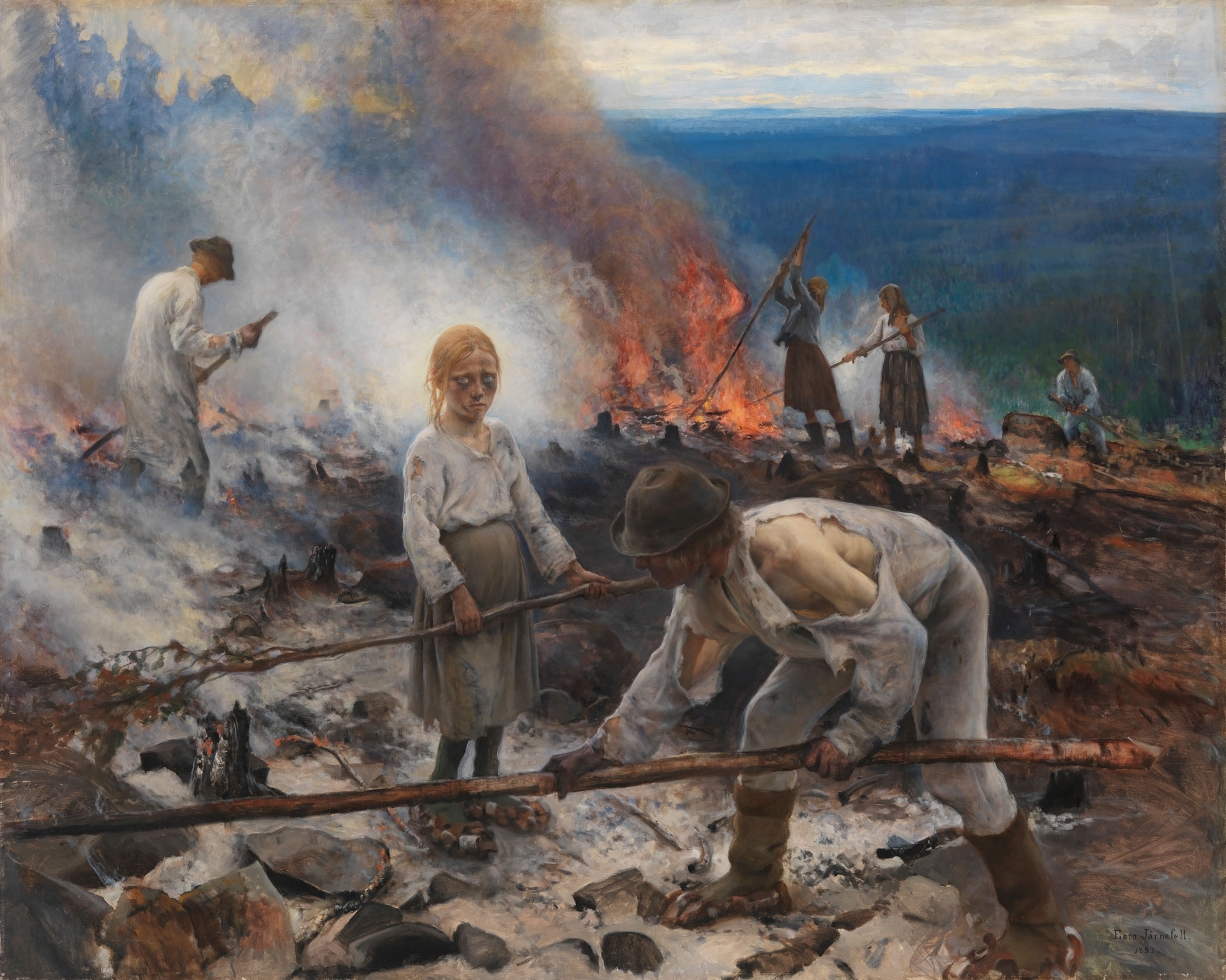
Painted in 1893 by Eero Järnefelt, this Kalevala-inspired masterpiece was partially created outdoors in Väisälänmäki, with local residents serving as models. The original painting is part of the Finnish National Gallery’s collection at the Ateneum Art Museum in Helsinki. Read more about the painting and its background on the Finnish National Gallery website >